Free Privacy Software Isn't Always Free: How to Tell Who's Really Protecting You
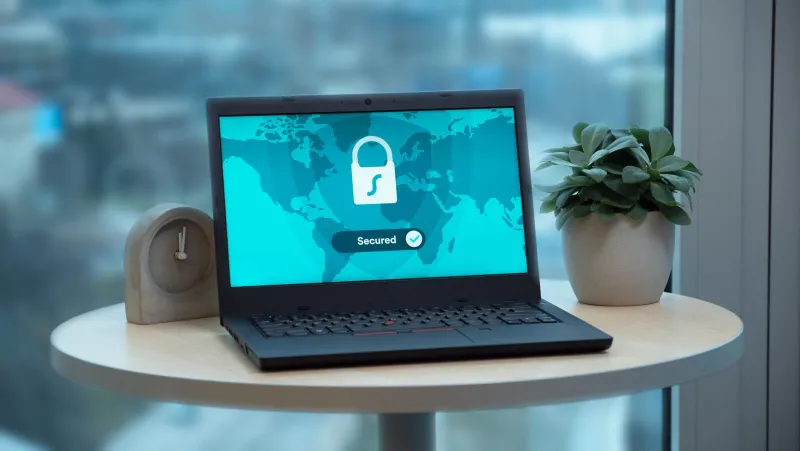
There is a maxim in the technology industry that has aged remarkably well: if you are not paying for the product, you are the product. Nowhere does this principle carry more weight than in the world of privacy software, where the very tools marketed to shield your personal data may be quietly harvesting it to keep the lights on.
For budget-conscious users in the United States, free privacy software represents an appealing entry point into digital self-defense. VPN clients, ad blockers, password managers, and anti-tracking extensions routinely offer no-cost tiers. The question worth asking — carefully — is what those free tiers actually cost in terms of your privacy.
The Freemium Business Model: A Primer
Freemium software is built on a straightforward economic premise: attract a large user base with a free offering, then convert a percentage of those users into paying customers. For many categories of software, this model is entirely benign. A free photo editor that limits export formats is not a privacy threat. A free VPN that logs your browsing activity to sell to data brokers is a different matter entirely.
Privacy tool developers face an inherent tension. Building and maintaining robust security software is expensive. Engineers, infrastructure, audits, and legal compliance all carry real costs. When no subscription revenue flows in, developers must find alternative funding mechanisms. Those mechanisms vary widely in how much they compromise the user experience — and the user's data.
Common Monetization Strategies to Watch For
Data Brokering and Aggregated Analytics
Some free VPN and anti-tracking tools collect anonymized — or allegedly anonymized — usage data and sell it to market research firms or advertising networks. The privacy policies of these products often disclose this practice in dense legal language that most users never read. In 2020, a widely publicized investigation revealed that Avast, through its subsidiary Jumpshot, had been selling granular browsing data collected from millions of users who had installed its free antivirus software. The data was purportedly anonymized, but researchers demonstrated it could be de-anonymized with relative ease. Avast subsequently shut down Jumpshot, but the episode illustrated how normalized this practice had become.
Aggressive Upselling and Feature Gating
A more benign but still significant tactic involves deliberately crippling the free tier to the point where it provides minimal genuine protection. Free VPN plans that cap bandwidth at 500 megabytes per month, or password managers that restrict storage to a single device, are not truly functional privacy tools — they are marketing vehicles designed to frustrate users into upgrading. This is not inherently deceptive, but it is worth recognizing that the free version of such products may offer only the illusion of protection.
Bundled Software and Toolbar Installations
Older but still prevalent, this tactic involves packaging free privacy software with additional programs — browser toolbars, system optimizers, or search engine redirects — that generate affiliate revenue when installed. Users who click through installation prompts without reading carefully may find their browsers reconfigured and their default search engine quietly changed to one that monetizes their queries.
Third-Party Advertising Within the Application
Some free tools display advertisements directly within the software interface. While this is transparent and relatively low-risk from a data perspective, it does raise questions about which advertising networks are involved and whether behavioral targeting is being used to serve those ads.
Identifying Legitimate Free Privacy Tools
Not all free privacy software is predatory. Several genuinely trustworthy tools operate on funding models that do not compromise user data. Here is how to evaluate them.
Examine the Privacy Policy Closely
A credible privacy tool should publish a clear, plain-language privacy policy that explicitly states what data is collected, how it is used, and with whom it is shared. Look for explicit statements that browsing data, connection logs, and usage patterns are never sold to third parties. Vague language such as "we may share data with trusted partners" is a red flag.
Look for Open-Source Code
Tools with publicly auditable source code are significantly more trustworthy than closed-source alternatives. When the code is open, independent security researchers can verify that the software does what it claims. Examples include uBlock Origin for ad blocking and Bitwarden for password management — both are open-source, free to use, and backed by transparent development communities.
Verify Independent Audits
Reputable privacy tools commission independent security audits from firms such as Cure53 or SEC Consult and publish the results. The presence of a recent, published audit does not guarantee perfection, but it demonstrates a commitment to accountability that monetization-first products rarely bother to demonstrate.
Understand the Funding Model
Some free tools are funded by donations, grants, or a paid enterprise tier that does not require monetizing individual users. Mozilla Firefox, for instance, is funded in part by search engine partnerships, and while that arrangement has its own complexities, it does not involve selling user browsing data. Proton, the Swiss-based company behind ProtonMail and ProtonVPN, offers free tiers funded by its paid subscriber base — a model that aligns developer incentives with user privacy.
A Practical Framework for Evaluation
Before installing any free privacy tool, apply the following checklist:
- Who develops it? Is the organization established, transparent about its team, and based in a jurisdiction with strong privacy laws?
- What does the privacy policy actually say? Read it — particularly the sections on data collection and third-party sharing.
- Is the source code available for review?
- Has it been independently audited?
- What is the stated funding model? If the answer is unclear, treat that ambiguity as a warning sign.
- What permissions does it request? A browser extension that requests access to all website data when it only needs to block ads deserves scrutiny.
The Bottom Line
Free privacy software occupies a paradoxical space in the digital security landscape. The tools designed to protect your data can, under certain business models, become some of its most efficient collectors. The distinction between a privacy tool that is genuinely free and one that merely appears free lies almost entirely in the details of its funding model and data practices.
For US users navigating this space, the most effective defense is informed skepticism. Before trusting any application with access to your browsing activity, your files, or your network traffic, invest the time to understand who built it, how they sustain it financially, and what they do with the information it collects. In privacy software, transparency is not a bonus feature — it is the baseline requirement.