The Premium Privacy Myth: Why Paying More for an App Does Not Mean Your Data Costs Less
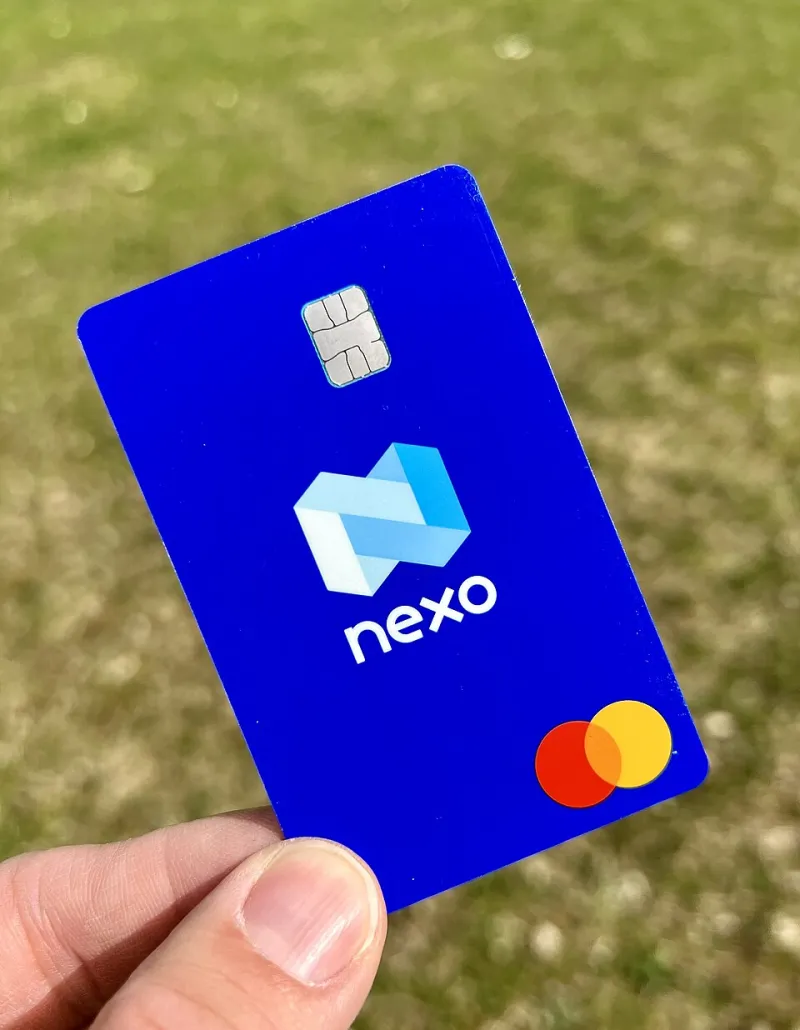
Photo: XoMEoX, CC BY 4.0, via Wikimedia Commons
There is a widely held belief among privacy-conscious consumers that paying for software is an act of self-protection. The reasoning is intuitive: if you are the customer rather than the product, the company has no commercial incentive to harvest your data. You have paid for the service. The exchange is complete.
This reasoning is understandable. It is also frequently wrong.
The relationship between subscription pricing and data collection practices is far more complicated than the 'if it's free, you're the product' maxim suggests. Premium applications — including many marketed specifically as privacy and security tools — routinely collect behavioral data, share it with third-party analytics providers, and build advertising or data licensing revenue streams alongside their subscription income. The paywall conceals these practices more effectively than it prevents them.
What 'Premium' Actually Buys You
When a consumer pays for a premium application, they are typically purchasing one or more of the following: an expanded feature set, removal of advertising, priority customer support, or increased storage capacity. What they are almost never explicitly purchasing is a data collection exemption — because such exemptions are rarely part of the product.
Consider the analytics layer that underlies most modern applications regardless of their pricing model. Tools such as Firebase, Amplitude, Mixpanel, and Segment are embedded in paid applications across virtually every software category. These SDKs collect session data, feature interaction logs, device identifiers, and behavioral telemetry that developers use to inform product decisions. From the developer's perspective, this data is operationally valuable independent of whether a user is paying. From the user's perspective, the distinction between a free app tracking their behavior and a paid app doing the same thing is functionally invisible.
A 2022 audit conducted by privacy researchers at AppCensus examined data flows in popular paid iOS and Android applications across multiple categories including productivity, health, and security. The findings were consistent with earlier research: a significant proportion of paid apps transmitted data to third-party advertising and analytics domains, with no meaningful correlation between subscription price and data collection scope.
The Security and Privacy App Category Is Not Exempt
Perhaps the most troubling manifestation of this phenomenon occurs within the privacy and security software category itself — the very products consumers purchase with the explicit expectation of protection.
VPN services represent an instructive case study. The VPN market includes numerous paid providers that prominently advertise no-logging policies, yet whose privacy policies — on careful reading — authorize the collection of connection metadata, device identifiers, and aggregate usage statistics. Some providers share this data with parent companies whose primary business involves digital advertising. The subscription fee purchases bandwidth and server access. It does not purchase a data-free relationship.
Password managers, another staple of the privacy-conscious consumer's toolkit, have faced similar scrutiny. Several premium password managers have disclosed in their privacy policies that they collect vault metadata — not the contents of stored credentials, but information about how the vault is used, which device types access it, and how frequently. This metadata, combined with account information, constitutes a meaningful behavioral profile even in the absence of credential content.
Antivirus and endpoint security products have a particularly complex history in this regard. Multiple major paid security vendors — including some with household name recognition in the United States — have been documented selling anonymized browsing data collected through their products to third-party data purchasers. In several cases, the data was found to be insufficiently anonymized to prevent re-identification. The security product had itself become a surveillance vector.
The Business Model Logic
Understanding why paid apps collect data requires understanding the economic pressures that shape software business models. Subscription revenue, while valuable, is subject to churn — users cancel, downgrade, or switch to competitors. Data assets, by contrast, appreciate over time and generate revenue streams that are structurally independent of the subscription relationship.
For venture-backed software companies, data collection is frequently part of the investor value proposition regardless of pricing model. A company that has built a detailed behavioral database of its user population has an asset that commands valuation multiples independent of subscription income. This dynamic creates incentives for data collection that persist even when a company's public positioning emphasizes privacy.
Acquisitions introduce a separate risk vector. A privacy-respecting paid application can be acquired by a larger company with materially different data practices, at which point the privacy policy that governed your data at the time of purchase may be revised with limited notice. Several prominent privacy-focused applications have undergone exactly this transition, with their user bases transferred to acquirers whose data practices were substantially more aggressive than those of the original developer.
A Framework for Evaluating Paid Privacy Products
Given the gap between premium pricing and privacy assurance, the following framework provides a more reliable basis for evaluation than price alone.
Examine the privacy policy for third-party SDK disclosures. A trustworthy privacy policy will name the analytics and data-processing tools embedded in the application, not simply refer to 'service providers' or 'trusted partners.' The absence of specific disclosure is itself informative.
Use a network traffic analyzer to audit data flows. Tools such as Little Snitch on macOS or NetGuard on Android allow you to observe what domains an application communicates with during use. An application transmitting data to advertising network domains or unfamiliar analytics endpoints warrants scrutiny regardless of its subscription price.
Verify independent audits. For security-critical applications — VPNs, password managers, encryption tools — prioritize products that have commissioned and published independent third-party audits of both their code and their infrastructure. Self-reported no-logging claims carry far less weight than verified audit findings.
Research the company's ownership and funding structure. A privacy-focused application backed by a data-monetization-oriented parent company or investor presents structural incentives that no privacy policy language can fully neutralize. Corporate ownership is a matter of public record and takes only minutes to research.
Treat privacy policy changes as material events. Set a calendar reminder to review the privacy policy of any paid privacy or security tool annually. Subscribe to the company's blog or changelog for policy update notifications. What you agreed to at the time of purchase may not reflect current practice.
Reframing the Value Proposition
The goal of this analysis is not to suggest that paid applications are uniformly untrustworthy — many premium products do represent a genuine improvement over their free-tier or ad-supported counterparts. The goal is to dislodge the assumption that payment is a privacy proxy.
Privacy is not a feature that automatically accompanies a price tag. It is a set of verifiable practices that require active scrutiny to confirm. For users who have invested in premium tools with the expectation of protection, that scrutiny is not a betrayal of the product — it is precisely the kind of informed engagement that genuine privacy requires.