Always On, Always Watching: The Hidden Data Appetite of Your Smart Home Devices
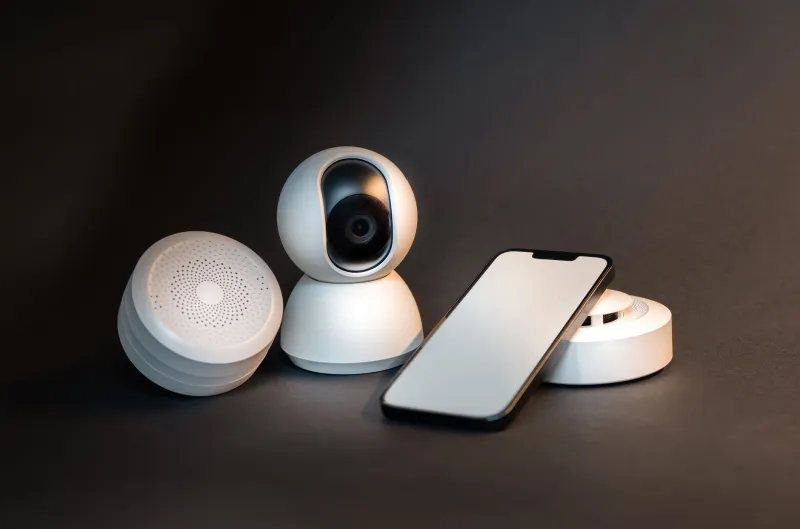
The pitch is compelling: a home that responds to your voice, adjusts the thermostat before you ask, and lets you check the front door from anywhere in the world. Tens of millions of American households have embraced this vision, installing smart speakers, connected televisions, video doorbells, and AI-powered appliances without a second thought. What most consumers never consider is the data infrastructure required to make all of that convenience possible — and who else has access to it.
The reality is that smart home devices are not passive tools that wait for your instruction. They are persistent data-collection endpoints, continuously monitoring their environment, logging behavioral patterns, and in many cases transmitting that information to corporate servers and third-party partners. Understanding exactly what is being captured — and by whom — is the first step toward reclaiming meaningful control over your connected home.
The Microphone That Never Truly Sleeps
Amazon Echo, Google Nest, and Apple HomePod devices are marketed as voice assistants that activate only upon hearing a designated wake word. In practice, the boundary between "listening" and "waiting to listen" is far more porous than manufacturers typically acknowledge.
Researchers at Northeastern University and Imperial College London published findings demonstrating that popular smart speakers activated unintentionally dozens of times per day in response to words phonetically similar to their wake phrases. During each of those accidental activations, audio snippets were recorded and transmitted to cloud servers. Amazon has publicly confirmed that human reviewers listen to a subset of Alexa recordings to improve the service — a disclosure that generated significant backlash when it surfaced in 2019, despite being buried in the company's privacy documentation.
Google faced a parallel controversy the same year when a contractor leaked thousands of recorded Google Assistant interactions to a Belgian news outlet. The recordings included private conversations, medical discussions, and intimate domestic exchanges — none of which the device owners believed they had consented to share.
These are not edge cases. They reflect a structural feature of how these systems are designed. The wake-word detection model runs locally on the device, but the moment audio is flagged — accurately or not — it travels across the internet to be processed remotely.
Smart TVs: The Screen That Watches Back
Modern smart televisions present a distinct but equally serious privacy concern. Automatic Content Recognition (ACR) technology, deployed by manufacturers including Samsung, LG, Vizio, and Roku, captures snapshots of whatever appears on your screen — whether streamed, broadcast, or played from a local source — and matches that content against a reference database. The result is a detailed log of your viewing habits, assembled in near real time.
Vizio reached a $2.2 million settlement with the Federal Trade Commission in 2017 after the agency found the company had been collecting viewing data from 11 million televisions without adequate consumer disclosure, then selling that information to third-party advertisers and data brokers. The settlement required Vizio to obtain affirmative consent before enabling ACR — but the default setting on most smart TVs still activates this feature automatically upon setup, counting on users not to navigate deep into settings menus to disable it.
Beyond ACR, smart TVs equipped with cameras and microphones for video calling or voice navigation introduce the same always-on concerns as dedicated smart speakers, compounded by the fact that televisions typically occupy central living spaces where private conversations are commonplace.
Metadata: The Data You Forgot to Worry About
Even when device manufacturers behave responsibly with audio and visual data, the metadata generated by smart home ecosystems can be extraordinarily revealing. A 2017 Princeton University study demonstrated that traffic analysis of a smart home network — examining only when devices communicated with external servers, not the content of that communication — could reliably infer when occupants woke up, when they went to sleep, whether they were home, and what activities they engaged in throughout the day.
Smart locks record every entry and exit. Smart plugs log when appliances are powered on and off. Connected thermostats build a detailed schedule of occupancy patterns. Individually, these data streams seem mundane. Aggregated over weeks or months, they constitute a behavioral profile of remarkable granularity — one that insurance companies, advertisers, and law enforcement agencies have all sought access to through various legal and commercial channels.
Third-Party Integrations and the Data Sharing Problem
One of the most underappreciated privacy risks in smart home ecosystems is the third-party skill and integration model. Amazon's Alexa alone supports tens of thousands of third-party skills developed by external companies. When you enable a skill, you are frequently granting that developer access to your account data, usage history, and in some cases stored audio. The privacy policies governing those third-party developers are separate from Amazon's own policy and vary enormously in quality and rigor.
Google's Home ecosystem presents similar risks through its integration with third-party smart devices and services. Each integration point represents an additional party with potential access to your data — a party that may have significantly weaker security practices than the primary platform.
Evaluating Ecosystems: Which Platforms Offer Stronger Privacy Controls
No major smart home platform is without privacy trade-offs, but meaningful differences exist in the controls available to users.
Apple HomeKit maintains a stronger privacy posture than its competitors by processing the majority of requests locally on-device or within the home hub rather than routing them through remote servers. Apple does not use HomeKit data for advertising purposes, and its privacy nutrition labels in the App Store provide relatively transparent disclosure of data collection practices. For privacy-conscious users, HomeKit-compatible devices represent a more defensible choice, albeit often at higher cost.
Google Home offers granular activity controls through the My Activity dashboard, allowing users to review and delete voice recordings, though the default settings favor data retention. Google's business model is fundamentally advertising-driven, which creates structural incentives for data collection that privacy settings can mitigate but not eliminate.
Amazon Alexa provides similar deletion controls and introduced a setting allowing users to opt out of human review of their recordings — but that setting must be actively enabled and is not the default. Amazon's growing advertising business has increased its interest in leveraging Alexa interaction data for targeting purposes.
Auditing Your Own Smart Home: A Practical Framework
Regardless of which ecosystem you use, the following steps will meaningfully reduce your exposure:
Inventory every connected device. Log into your router's administration interface and review the list of connected devices. Many households discover devices they had forgotten about or did not realize were network-connected.
Disable microphones and cameras when not in use. Many smart speakers include a physical mute button that cuts power to the microphone at the hardware level — use it. For smart TVs, navigate to settings and disable both the microphone (if present) and ACR or "SambaSmart" or equivalent viewing data features.
Review and revoke third-party integrations. In the Alexa app, navigate to Skills & Games and audit every enabled skill. In Google Home, review linked accounts and services. Remove any integration you do not actively use.
Segment your smart home devices onto a separate network. Most modern routers support the creation of a guest network or VLAN. Placing smart home devices on an isolated network prevents them from communicating directly with your computers, phones, and other sensitive devices, limiting the blast radius of any potential compromise.
Review privacy settings immediately after any device update. Manufacturers frequently reset privacy preferences or introduce new data collection features through firmware updates. Treat each major update as an occasion to revisit your settings.
Consider a network-level monitoring tool. Applications such as Pi-hole or commercial alternatives can log outbound connection attempts from every device on your network, making it visible when a smart speaker is phoning home at unexpected hours.
The Convenience Calculation
Smart home technology is not inherently incompatible with a privacy-conscious lifestyle, but the default configuration of nearly every major platform is optimized for data collection rather than data minimization. The burden of adjustment falls entirely on the consumer.
Approaching connected devices with the same skepticism you would apply to any software installation — reading the privacy policy, understanding the data flows, and actively configuring settings rather than accepting defaults — is the foundation of a defensible smart home posture. Convenience that comes at the cost of comprehensive behavioral surveillance is a trade-off worth examining carefully before you make it.